Showing posts with label Reading. Show all posts

Sunday, August 6, 2017

Communicating with Strangers

While puttering around the last couple weeks on my extended vacation, I had a chance to read through a couple texts that had caught my eye.  I wanted to sort of ease myself back into writing by talking about one of these texts; Communicating with Strangers: An Approach to Intercultural Communication.The book is written by William B. Gudykynst and Young Yun Kim.  The second edition is dated 1992, so it is an older text.  I didn't have a chance to extensively look for a newer version but I did find a fourth edition from 2002.  Some of the material may be a bit dated. Regardless, I found it fascinating and I plan to read it through again while making more thorough notations.  If I can find a newer version, I would love to include this as a class text for any ESL "train the trainers" type classes.  
 
Although the text was written for a communications course, it serves well for anyone who communicates with people of different cultures; especially in group settings.  The book is divided into four parts.  Part One lays out some conceptual background towards communication in general.  The authors lay out their plan for the text and they discuss the "big picture" of what communication is all about.  They do a really good job of providing a defining structure for communication by laying out eight assumptions of communication.  They briefly discuss uncertainty and anxiety in communication, and they provide an overview of what the term culture means with regard to their plan for the book.  They also break down the concept of "the stranger". And,at the end of Part One they identify their model for the study of communicating with strangers.  This serves as a guide for the remainder of the book.

For sake of brevity, I won't try to over analyze the remainder of the book.  However, the authors take a very systematic to their study.  They begin Part Two by identifying and discussing influences that affect the overall process of communication with a stranger.  Part Three includes a chapter on nonverbal communication.  I found this to be very interesting as it discusses cues and emotion which are always confusing.  Part Three discusses the concepts of encoding and decoding as well, and includes a chapter on language usage.  Part Four speaks to interaction with strangers and details concepts of adapting communication, managing conflict, and dealing with romantic relationships.  I found the latter very interesting as my wife is a non-native English speaker and comes from an Asian cultural background.

The drawback to the book is that it is too old to accurately address communication via cellphone or through other digital means.  I do think many of the concepts transfer though.

In short, I think this is a great book for anyone looking to wards dealing with ESL students or perhaps evening contemplating a stint teach overseas. 


ISBN-13: 978-0071195379
ISBN-10: 0071195378


Monday, May 1, 2017

Chickens!!

My wife and I decided to try and raise some chickens.  We have both decided to try and become a little more Earth friendly and this is one of the ideas we came up with.  How does this pertain to teaching ELL students?  I am glad the question is in your mind as you read this post.

One of the biggest challenges an instructor faces in a multicultural classroom is making the initial connection to one's students.  It can be a huge impediment to learning.  I would suggest that many Americans, in general, have little knowledge of life in the rest of the world.  Sure, there is Europe and some parts of Asia that most Americans could be comfortable residing in for a period.  But, how do you relate to a student from a third-world country; chickens!

Chickens are ubiquitous in most poorer countries.  I can't even remember the number of places I have visited where chickens were underfoot and everywhere.  Now that I am raising chickens myself, I have a perfect place from which to open up a discussion.  I would be shocked if in a class of ELL students I wouldn't find someone who had chickens around at some point in their lives.  There is a wealth of material in just this one simple connection.

There is all manner of vocabulary just about food; eating chicken for a meal or eggs.  What are some good recipes for chicken?  What do chickens themselves eat?  From there one could talk about raising chickens or raising animals in general.  Did anyone have a pet or have to do work related to chickens or other animals.  The list of potential topic is as endless as one's imagination.

The point is that making that initial connection is key to getting a class moving in the right direction and stimulating participation and conversation ... so, don't discount chickens when it comes to ELL learners.

Monday, April 10, 2017

Teaching Philosophy

I had an interesting discussion today, brief but interesting, about teaching philosophy.  I wanted to share my thoughts before I got involved in another task and 12 days had passed before I remember again.  We've all had a week like that, right?  I keep meaning to write a bit more frequently, but life seems to get in the way.

My teaching philosophy has evolved over the years and continues to evolve as I become more knowledgeable.  I actually don't remember what I first developed as my initial teaching philosophy but I am sure I have it saved somewhere on a thumb drive.  I was actually meeting with the professor who first forced me to write it down and we discussed that many students,  hoping to teach, have never developed a teaching philosophy.  Yet, they want to teach just as I did when I realized that I did not have any thoughts on a teaching philosophy of my own.

To me, the basic tenet of my teaching philosophy is that I want to try and deliver the best material to my students that I can.  I feel that as a professional I owe them nothing less than my best.  This is what motivates me to continue to learn and to even start writing this blog.  It is a little hard to put oneself out there and become open for criticism.  However, without being challenged, we tend to stagnate.  In all my years of work, not just teaching but any kind of work, the most hated two phrases I hear are, "Because that's how we've always done it." or any phrase with "can't."  I am not sure why people repeat those types of phrases but they seem to be the go to excuse for not making change. Usually they have been espoused by the mysterious "they."  I once asked someone to, "Give me they's phone number."  It made me smile when they became so flustered that they did not realize my mistake in pronoun usage.  I am always seeking to change things.  I figure at my age the worst that can happen is I get a little embarrassed by my failure.  Who cares!  So, give the students your best, even if it ends up being a bit of a bomb.  They will appreciate the effort.

My next basic tenet is to use real material.  If you understand that language evolves then you have to understand that the materials we use to teach; the language, the texts, the exercises, etc. all have to evolve as well.  I will find some old exercises floating around and realize they are no longer valid but still in use for some reason.  Why not change them out for newer material?  Plus you have to become technically adept and try some different techniques for delivering your material.  There is nothing wrong with using some technology if it is applicable.  Believe me, the students definitely use tech.

Finally, be flexible.  As I stated in an earlier blog, I was forced to do some radical rethinking when faced with a class that I just didn't seem to be reaching with my stated syllabus.  I had to try a few different and new things, and I was able to incorporate a little class observation into my thinking.  There is nothing wrong with taking part of a class period and just chatting with your students.  Find out what they are looking for and what interests them.  And, as I stated above, try some new techniques.

I want to close with just a bit of generic advice that was offered to me.  Don't always feel you have to teach to the now.  Sometimes you are teaching to the future.  What I mean to say is that if you give your all and it seems things are not working out, just continue to provide your best and I assure you that a few weeks down the road the class will click and all that information will come flooding back to the students that you thought they were missing.

Wednesday, March 29, 2017

Better Late Than Later ... More About Star Magazine

          I took a bit of vacation the last week and found it a bit hard to get a chance to sit down and post something.  However, I am back and ready to do some free writing.

          I got asked to describe more about how I make use of Star magazine with ELL students.  So, I am going to revisit that topic for those that asked.  Because the magazine is very visual, I have included a scan of the article for reference.


          Generally the magazine has three or four really good articles; each of one to three pages in length.  Also, every issue has a couple sections that repeat through every issue.  This is one of those repeated sections; "Star Buzz".  When I am preparing a lesson, I like to start off by developing some background for the readings.  This article provides a good place to start.  Jimmy Fallon is a well-known personality and most ELL students will have some idea of who he is or you might be able to show a clip to sort of introduce him to those who don't.

          After a short discussion, which also stimulates conversation, I will introduce five to ten new words that I would like the students to learn.  I try to use words that share something, to sort of keep a theme for the lesson.  For this article I would probably only go with five and I would try to group them around divorce or perhaps argument.  And, in some cases the list of words might include some idiomatic phrases as well.  With this in mind, I would select 'mend the rift', 'acrimony', to 'argue', 'moody', and 'frustrated'.  Obviously there a couple others that would fit in this group as well, and I might be inclined to have the students try and hunt those words down on their own.

          The next step would be to have a couple students read the selection including the side bars.  I also like to have the students try to explain what they read in their own words and to try and puzzle out the meaning of the vocabulary words as well.  I will often have the students try to figure out the overall tone of the article by using the pictures as clues.  I might do this as a pre-reading exercise.  And, finally I would end the lesson with a few comprehension questions as a check on both subjective and objective understanding.  For example I might ask about their ski trip for a subjective response and maybe something about how his wife might feel in search of a more objective understanding of the article.

          There is so much more one can do with this article and I am just giving you a short look at what I might try.  Other ideas might be to try and explain why it is called "Star Buzz" or to use it as a prompt for some writing, or to stimulate even more conversation about marriages and divorces.  In fact a whole unit could be built around marriage and divorce using this article as a portal.

          As you can see the Star may be a bit simplistic for an American who has seen it in the grocery line for years, but for an ELL student it is a look into our culture and it is a great tool from which to learn.

Wednesday, March 15, 2017

Snow, Snow, More Snow, and TOEFL.iBT Study Guides

          I want to apologize for being a little slow in my postings the past couple weeks.  I wanted to try and post once a week, but life sometimes gets in the way.  Obviously anyone in and around Maine knows we got hit with another foot or so of snow this week.  As a result, my days have been spent shoveling and not writing or working with students.

          I got asked, about a week ago, what study guide I would recommend to a student studying for the TOEFL.iBT.  I always cringe a bit when I get asked these types of questions.  I really dislike these sort of formulaic study guides overall, but I do see the purpose behind them and I understand why they sell.  Let me just be really honest here and tell you that every bit of the content in these study guides can be found online for free.  Yes, there may be a bit more work involved in tracking down the information and yes maybe that extra time is not easy to find in a busy schedule, but I promise the extra work will pay off.  So, my answer to the question of which study guide to go with is to go with none of them, and instead try a little google time on the computer.

          I know I can't leave the questions completely unanswered.  I know many people still want a book.  I do think the study guides are fine and if forced to give an answer I would steer a student towards the Cambridge Preparation for the TOEFL Test by Jolene and Robert Gear.  I think I have the second edition, but they are all fine.  In reality you really only want them for the practice tests and I have found that this particular guide has the most 'user-friendly' software.  I know that many people buy these guides with the good intention of actually using them and reading all the information, yet many never even open them.  Buy whatever guide you feel comfortable with, open it up and work through the practice tests.  If you get a chance skim through the parts that interest you.  However, the internet offers way more for your time and by way of a bit of a plug for people like me; take a class from someone who has experienced the test and who can help you work through your specific needs.


Monday, March 6, 2017

My First Book Review

          I wanted to find a way to recommend some of the books that I have read and used, of course, in my work.  I thought for a long time about which one I would choose to recommend first.  After all of my exposure to literacy materials, I came back to the work that first caused me to sort of say "Wow!" For me that work is a small book by an British linguist; David Crystal.  I would suspect that many of you who might read this blog probably don't know David Crystal.  I had never heard of him myself. His book caught my eye while I was browsing around the Harvard bookstore a couple years ago.  I snapped it up and have enjoyed it ever since that time.  I constantly go back to it and just refresh my thoughts.

          Hmm ..., I guess you are probably wondering the name of the book?

Crystal, D. (2002). The English language. London: Penguin.


          I don't want to spend too much time laboring over the minutia of the book, but I want to highlight a few of the parts that I have found exciting and just give an overall picture of the book to those who might be interested in picking it up for themselves.

          First, it is a short book; just over 300 pages, cover to cover.  I think once you start to read it you will find yourself continually rereading parts as you absorb the particular sections.  The book is structured with a short introduction and three main sections, each of about five chapters or roughly 100 pages. I find that the short sections and chapters make for a really relaxing read.

          The introduction covers current English, or at least current for 2002.  It is interesting because it covers pidgins and creoles.  From there the three sections cover the structure, use and history of English.

          The section on structure covers exactly what one would expect; grammar, pronunciation, vocabulary, and spelling.  I really like the pronunciation chapter as it completely wrecks the idea of phonics.  Crystal also speaks to the quirkiness of our spelling.  It makes me laugh as spelling is always confuses my ELL students.  They just don't get the silent letters and multiple spellings of words that sound exactly the same (homonyms).

          The second section covers fun language like "truckers slang" and other subsets of professional language.  It is also noteworthy in that it includes a chapter on the effects of technology on English. Obviously this is even more relevant now in 2017.

          The third section goes through the history and evolution of English,  This will certainly enlighten those who wonder where some of our words and spelling rules come from.  It ends with a brief look into Crystal's thoughts on the future of our language.  Again, in this section he talks a bit about how technology has affected our language.  He speaks to a trend towards simplicity as technology limits our language.  He is writing before the explosion of some current social media platforms, but his thoughts bring to mind twitter's character limit.

          Overall, I want to encourage all literacy professional to take a look at this little gem of a book.  I think you will find it sort of  tour guide to English.

Tuesday, February 21, 2017

ESL and Star Magazine

          First, I want to thank those of you who have taken a look at and/or have read my blog.  I hope I am providing you a good read and maybe giving you a bit of information to think on as well.

          So, what does the Star Magazine have to do with ESL learning?  Without question, it is one of the best resources I have ever found when instructing adult learners.  There are plenty of resources out there for younger learners; annotated readers, online worksheets, and other items to help any instructor.  I have discovered that the same is not as true when looking for resources targeted towards ELL adults.

          My first experience teaching English outside of the Army was an adjunct position at a fairly large community college.  I was excited to get the opportunity and was surprised to learn that the entire ESL department was me.  I would be teaching four classes; ESL Reading, ESL Listening, ESL Speaking, and TOEFL.iBT Prep.  My new boss left the curriculum basically, completely up to my whims. Please don't misunderstand.  She was a great mentor and so very willing to help, but just did not have the time to babysit me through setting up my curriculum.

          I was confident that I was prepared and relied a lot on my own experiences teaching through my time in the Army.  Young Soldiers or young students, could they be that different?  Surprisingly they are markedly different.  My first class of the new semester, ESL Reading, was a class of 18 students, all female, all but one from Central and South America, and with an average age of about 35.  These were not typical college students nor were they typical Army students.  The majority had lived in the U.S. for several years and almost all were looking to improve their English skills as a means to better their lives.  They wanted practical, every day language not an ESL version of Charlotte's Web. There is nothing wrong with Charlotte's Web, but reading it won't necessarily get you a pay raise at work.

         To say the least, I was dumbfounded.  I muddled through my first day's lesson but knew I would have to "up my game".  I communicated my helplessness with every friend, colleague, and mentor I could contact.  Several offered great suggestions, but none of the suggestions seemed to be the right fit for this class. Then, I remembered that while waiting for class to begin, some of the students had been discussing a reality show they had been watching.  I don't remember the exact show, but it sparked an idea.

         My mother was sort of addicted to Star Magazine.  We actually had it delivered to our house when I was younger and naturally I soon became sort of addicted to it as well.  The magazine is basically a collection of gossip and rumors about entertainers and other notable, "pop" culture figures.  I knew without a doubt that my new students would probably recognize some of the content simply because they watched television, listened to radio, and had access to the internet.  I knew this type of content would interest them.  Plus, for those who don't know,  Star Magazine is extremely visual. Every article is accompanied by numerous photos and splashy colored text.  Furthermore the articles are generally short, only a page or two long, which would keep the text fresh and new as we read.


          What I discovered after reading through several issues is that the magazine has a few other surprises in it that proved valuable for my ESL adults.  First, the language is simple and current.  It is the same language one would hear at the mall or on television.  Second, the syntax is current as well. Third, often the photos represent the exact text.  For example, if the article is about someone being angry, the photos show that person being angry.  What this does is strengthen the contextual clues in determining the meaning of unknown words.  If one didn't know what the word "angry", meant it would be clear from the picture.  Finally, Star Magazine has a unique style of using multiple synonyms in the same article.  Again, one might see the word "angry", see an angry picture, but also perhaps see the words upset, disgruntled, or perturbed in the article as well.  I found it not unusual to see an average of three synonyms each for one or two key words in almost every article.  The Star Magazine was my goldmine.  The students loved reading it and I found it merged well with the speaking class as well; serving as a conversation/discussion prompt.


          Take it from me, the Star Magazine is a great resource for adult ESL students.  If you are looking for something different as a teaching resource, why not give it a try.


Sunday, February 12, 2017

Reading Manga and Comics to Improve Literacy

Reading Manga and Comics to Improve Literacy


          I am an unashamed "fanboy" when it comes to both Manga and Comics, or as we "fanboys" say; we read Sequential Art.  I won't delve too deeply into the differences between the two, but there are some very obvious aspects that do differ. Any casual reader will spot them right off.  On another occasion, perhaps I will write a short piece specifically comparing Manga and Comics.  However, at this point, I would just rather discuss how they generally may or may not be effective in literacy improvement.

          First, I do believe that a competent literacy professional should make use of any and all tools that are available for their craft.  To this extent, by all means, use Comics and Manga.  Heck, use the back of food boxes!  Use whatever you can to get a student to read. 
          Those that know me, even slightly, know that I am a huge crusader for increasing the literacy of boys and male readers in general.  I am often perplexed by the fact that boys don't seem to read anymore.  I am just a bit saddened when I try to talk with a boy or young male and they have no literary background in common with me.  I should also add that as a "fanboy" I read many current titles, so I don't think the issues is that we have nothing in common due to age.  I can speak Pokemon and Ninjago with the best of them!  

          Second, as I do advocate the use of Sequential Art for improving literacy, I do think both Manga and Comics and Sequential Art in general can be used to help improve a person's reading ability and overall literacy.  However, there are a few things to keep in mind if one does decide to use these tools, and so we get to the point of my blog.

          I want to look a bit more closely at Manga.  For a novice "fanboy" or reader, Manga can be difficult.  The first thing one might notice is that it is backwards.  Manga books are written from right to left and generally from top to bottom.  Manga is traditionally from Japan and reading in what we consider a backwards direction is quite normal in Japanese culture.  This style will throw many readers off simply from a comfort standpoint.  Manga is also much more visually and theatrically oriented.  Again, Japanese culture is arguably more visual than ours.  Their alphabet makes use of visual characters to represent letters and words.  I am keeping this a bit basic and not trying to generically analyze Japanese culture in any way, so please bear that in mind.  A typical Manga book might contain several pages of just images with little or no words.  This is akin to a visual scene in a movie where the director is setting up a following shot or sequence in which there will be interaction between characters and thus dialogue; or words in the case of Manga.  Additionally, most Manga is done only in black and white or with only a few color pages at best. This will also detract from their appeal to many American students.  Lastly, I must say that some Manga are very daunting when seen sitting on a shelf.  They can be several hundred pages in length and resemble a more traditional paperback book.  However, once one starts to read a Manga book, one will find they are very easy to process and flow quickly.

          On the whole Manga use very current phrasing, or at least current to the Japanese authors who are writing them.  One will find a few actual Japanese words thrown into them as well.  Of course, we are speaking about reading translations so occasionally there are just some words that stay in Japanese. There is a good connection between the art and what is being said.  The real key is to look at the character's eyes.  This can often give a novice reader a good indication of the meaning of what a character is saying and help with understanding word meanings.  I think Manga's strength as a reading tool is that they are really easy to follow and can give a novice reader a good sense of completion when they finish such a large book. 

          The ease of flow with which Manga can be read, as it were, is also the biggest detractor from Manga being a truly effective tool for literacy improvement.  There are just cases where there are not many words in the books.  Obviously reading engages much more than just reading words on a page, but for someone trying to learn or trying to improve their reading skills, they would kind of need words to read.  For this reason I feel Manga is more suited for a beginning reader and probably more specifically for a beginning teen or adult reader.  There are Manga books for all ages and Manga genres for all readers, but most tend to be for a bit more mature audience.  I will add that Manga can be a great jumping off point for someone wanting to write though.  Using some of the art as a form of brainstorming for ways to begin or steer a potential work of prose is a great technique.

          Also, off on a bit of an interesting tangent; the biggest readers of Manga seem to be females.  I have spoken to many book store owners and employees anecdotally and they all seem to corroborate this fact.  From young teens to college age, women seem to be buying Manga more than their male counterparts.  In my opinion this is due somewhat to traditional Comics in America being the cultural domain of males.  Yes, I realize I am being a bit sexist and very general here, but the casual evidence seems to support this notion.  I might go with a Comic over a Manga book for a male student.

          So, what about Comics.  I won't get into the debate about what is and what is not a Comic. When I use the term, I am solely meaning the traditional Comic book of American culture.  The average American would have no problem picking one out at their local BAM or Barnes and Noble. For the record my personal favorite has always been Luke Cage a.k.a Hero for Hire.  

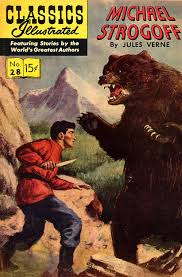
          I wholeheartedly support using Comics to aid in literacy development.  My friends and colleagues all know that I credit Classics Illustrated with my own entry into a lifetime of reading.  In third grade, I purchased, with my own money, and voraciously read the Classics Illustrated version of Jules Verne's Michael Strogoff: A Courier of the Czar.  I swear to people that I read that Comic a thousand times.  It was just such a great way for a novice reader to read a true classic.  I think it was integral in me making the leap to more challenging literature and to me enjoying reading to this day.
  
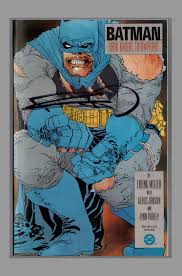
         Most readers will find comics visually stimulating and if they choose some of the more engaging Graphic Novel style Comics they will find them a good read overall.  No one who reads a Frank Miller comic can say they are just picture books.  I have a personal friend who actually teaches a class, at a major university, on superheroes and he uses, almost exclusively, Graphic Novels as his texts.  Traditional Comics are just a bit easier to sell to a novice reader.  The text is usually current and well-written.  It takes no small amount of skill for a Comic writer to flesh out a complete story in such a limited format, thus the text of a good comic is well written for the author's purpose. They must choose good words that really convey their message.  

          As with Manga, there are a few detractors from using Comics for building reading skills.  Some people will just not like them or think them a bit juvenile at first glance.  Unlike Manga, traditional Comics are quite short and may not be enough of a challenge for some more advanced students.  I tell my stepson that a good novel is like a good dinner and a Comic is like a good dessert. I am paraphrasing that from a Sean Connery line from the movie Finding Forrester, but it is a true statement.  Finally, the opposite is true with Comic readers than with Manga readers.  Most Comics are done by males for male readers, so female readers might not find them as interesting.  

          Please do use Comics and/or Manga to help improve literacy for anyone.  Obviously some people will just not like them or may just not be able to process the visual aspect of their stories but for many they will enjoy the break from more traditional reading exercises.  I do feel that many learners are visually oriented as well, and Sequential Art can help get a person reading where another sort of text might not. 

          I want to close my rambling by making mention of a couple academic texts which might help a literacy instructor gain some background about these, often bizarre and esoteric, tests. I have listed them below.

Schodt, F. L., & Tezuka, O. (1988). Manga! Manga!: the world of Japanese comics ; 
          includes 96 pages from Osamu Tezuka's "Phoenix", Reiji Matsumoto's "Ghost 
          warrior", Riyoko Ikeda's "The rose of Versailles", Keiji Nakazawa's "Barefoot 
          gen". Tokyo: Kodansha Internat.


Coogan, P., & OʼNeil, D. (2006). Superhero: the secret origin of a genre. Austin: 
          Monkey Brain Books.